


Vertical Life Lines: Understanding Fall Protection for Vertical Work
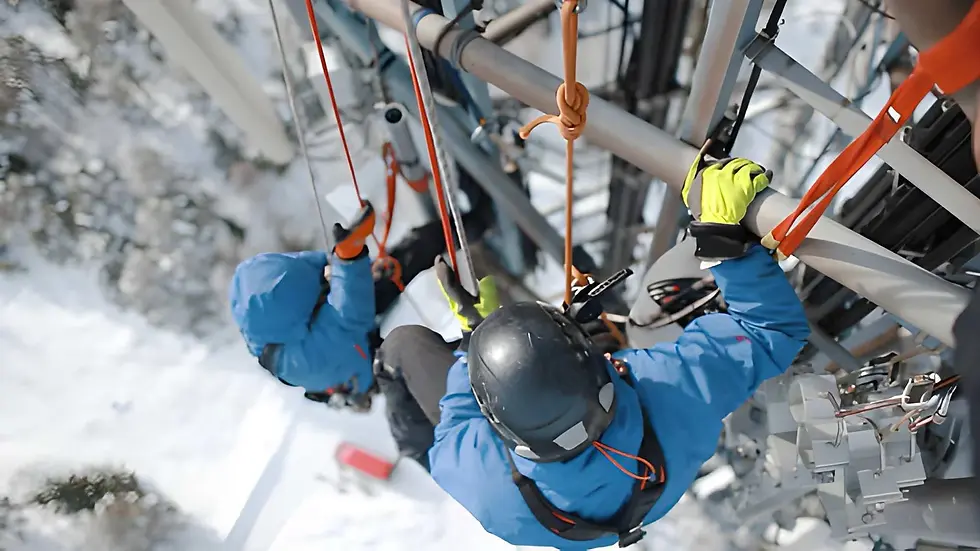
Working at height is a routine part of construction, maintenance, industrial work, and many other occupations. Workers may need to climb fixed ladders, access elevated platforms, work on towers, or move vertically along structures throughout the day. While vertical access may be necessary, it introduces one of the most serious hazards in the workplace: falls from elevation.
A vertical life line can be an important part of a properly designed fall protection system. When selected, installed, inspected, and used correctly, a vertical life line can help protect a worker if a fall occurs.
However, a life line is not simply a rope or cable that a worker clips onto. It is part of an integrated fall protection system, and every component needs to work together.
What Is a Vertical Life Line?
A vertical life line is a fall protection system that allows a worker to move vertically while remaining connected to an approved fall arrest system.
A typical system may include a vertical lifeline, an anchorage connector, a rope or cable grab, an energy-absorbing component, and a full-body harness. Depending on the application, the lifeline may consist of synthetic rope or steel cable.
The worker's connecting device travels along the lifeline as the worker climbs or descends. If a fall occurs, the system is designed to engage and arrest the fall.
Vertical lifelines can be used in applications such as fixed ladder systems, towers, elevated structures, and other locations where workers must travel vertically.
The exact equipment needed depends on the work environment, the manufacturer's instructions, the system design, and applicable OSHA requirements. A system that is appropriate for one application may not be appropriate for another.
Why Vertical Life Lines Matter
Falls are among the most serious hazards associated with construction and elevated work. A worker does not have to be dozens of feet in the air for a fall to cause a serious injury.
Vertical climbing presents several additional challenges. Workers need both hands for certain tasks, surfaces may be narrow or difficult to access, weather conditions may change, and workers may become fatigued during repeated climbing.
A properly designed vertical fall protection system provides an additional layer of protection.
The important word is system.
A lifeline by itself does not create a complete fall protection program. The anchorage, connector, harness, energy absorber, lifeline, and connecting device all need to be compatible.
OSHA's construction fall protection requirements establish criteria for personal fall arrest systems and other fall protection systems. Employers should evaluate the specific application and ensure the equipment and procedures being used meet applicable requirements.
Components of a Vertical Life Line System
The Lifeline
The lifeline is the primary vertical component of the system. Synthetic rope and steel cable are common options.
Synthetic rope can be flexible and relatively easy to handle, while steel cable can provide durability for certain permanent applications. The correct material and diameter depend on the system and manufacturer specifications.
Workers should never assume that one rope or cable can be substituted for another.
Compatibility matters.
The Anchorage
The lifeline needs to be connected to an appropriate anchorage.
An anchorage is one of the most critical parts of a personal fall arrest system because it must withstand the forces associated with a fall.
Anchorage selection should be based on the specific system design and applicable requirements. OSHA's criteria include requirements for anchorage strength or an appropriate design by a qualified person.
An anchor should never be attached simply because it "looks strong enough."
The Rope or Cable Grab
The rope grab or cable grab connects the worker's harness to the lifeline.
Some devices are designed to automatically follow the worker during normal movement. Others require manual adjustment.
The device must be compatible with the lifeline and installed according to the manufacturer's instructions.
Incorrect installation or orientation can prevent a system from operating properly.
The Harness
A full-body harness is generally used with personal fall arrest systems.
The harness distributes fall forces across appropriate areas of the body rather than concentrating the forces in one location.
Workers need training on how to inspect, adjust, put on, and properly use their harnesses.
Energy Absorption
Fall arrest can generate significant forces. Energy-absorbing components are designed to reduce the forces transmitted to the worker during an arrested fall.
The system must also have adequate fall clearance.
Fall Clearance Is Critical
One of the most frequently overlooked aspects of fall protection is clearance.
A worker can be wearing the correct harness and connected to an apparently appropriate lifeline, but if there is not enough distance below the worker, the system may not prevent contact with a lower level.
Fall clearance calculations may need to account for:
Connecting-device length
Energy absorber deployment
Lifeline stretch
Worker height
Equipment configuration
System-specific requirements
A required safety margin
Workers and supervisors should never estimate clearance by simply looking at the distance below them.
Fall protection planning should happen before work begins.
Inspect Before Use
Fall protection equipment should be inspected before use and whenever conditions warrant additional inspection.
Workers should look for damaged or deteriorated components, including:
Cuts
Frayed rope
Burn damage
Chemical damage
Broken or damaged stitching
Bent or damaged hardware
Corrosion
Broken wires
Damaged connectors
Deployed energy absorbers
Equipment that has experienced a fall should be removed from service and handled according to the manufacturer's requirements and the employer's fall protection program.
Training Is Essential
A vertical life line is only effective when workers know how to use it.
Training should address the hazards associated with the work, proper equipment use, inspection procedures, connection methods, fall clearance, and emergency procedures.
Rescue planning is especially important.
A worker who falls and is caught by a fall arrest system may remain suspended. A fall arrest system is designed to stop the fall; it does not automatically rescue the worker.
Employers should have procedures for responding to a fall and retrieving a suspended worker.
Building a Stronger Fall Protection Program
Vertical lifelines should be considered as part of a larger fall protection strategy.
That strategy may include:
Hazard assessments
Guardrails
Personal fall arrest systems
Personal fall restraint systems
Safe access systems
Worker training
Equipment inspections
Rescue planning
Jobsite inspections
The best fall protection program is one that workers understand and actually use.
How Must Be Safety Can Help
Must Be Safety provides safety training and consulting services designed to help organizations manage workplace risks and protect their workforce. Its services include fall protection training, safety program development, jobsite safety inspections, risk assessments, and hazard evaluations.
For companies whose employees work at height, proper fall protection should be more than a checkbox. Workers need practical knowledge they can apply when they are on the job.
Must Be Safety brings real-world experience from construction, manufacturing, electrical work, concrete operations, and industrial environments to its training and consulting services. The company also provides bilingual training in English and Spanish.
If your company needs help strengthening its fall protection program, evaluating jobsite hazards, or training workers on safer work practices, Must Be Safety can help you build a practical safety program designed around the hazards your team actually faces.


Comments